
These resources include detailed and thought-provoking studies on important topics, concise summaries of research relating to early childhood professional development and workforce issues (Research Notes), and important documents explaining requirements to become director-qualified. Our research aims to inform policy to embed quality supports for early childhood leadership in state and federal initiatives.

Research

McCormick Institute for Early Childhood logo in blue text on a white-to-light-blue background
By Robyn Kelton & Nudrat Hassan June 25, 2026
Early childhood care and education (ECEC) program administrators play a pivotal role in shaping both the quality and sustainability of the programs they lead.
By Robyn Kelton, Nudrat Hassan, & Xiaoli Wen June 8, 2026
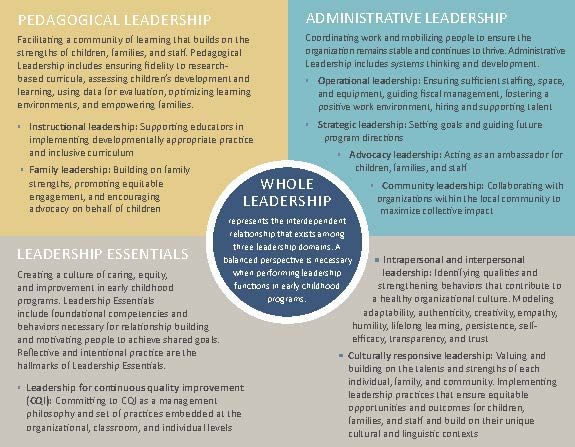
INTRODUCTION Early childhood education and care (ECEC) program administrators play a critical role in shaping program quality, workforce stability, and enriching children’s daily experiences (Doherty et al., 2015; Douglass, 2019; Sims et al., 2015; Talan et al., 2014). Leaders must simultaneously manage tight budgets, high turnover, regulatory pressures, and the emotional labor of supporting a stressed workforce, conditions that contribute to burnout and challenge program stability. However, many assume these responsibilities without formal preparation in program administration and leadership (Kelton & Talan, 2023; Kelton & Tenis, 2024; Talan et al., 2014; Whitebook et al., 2018). Since its introduction in 2017, the Whole Leadership Framework has provided the field with a conceptual model and defined components of early childhood leadership, ensuring consistent approaches to leadership standards and competencies (McCormick Institute for Early Childhood, 2026). The framework organizes ECEC program leadership into three interconnected domains: Leadership Essentials, Administrative Leadership, and Pedagogical Leadership. Leadership Essentials establishes the foundational culture of care, equity, and continuous improvement; Pedagogical Leadership focuses on building communities of learning that center the strengths of children, families, and staff; Administrative Leadership addresses the coordination of people and systems needed for organizational stability and sustainability. Taken together, the three domains define not only what early childhood administrators must know and do, but also the depth and integration of competencies required for effective leadership. Understanding how competencies develop over time and identifying the evolving needs of leaders at different points in their professional journey is essential. Adult learning theory, supported by research across diverse workforce sectors, including early childhood education, underscores the importance of aligning professional development with career development stages (Dall'Alba & Sandberg, 2006; Dreyfus & Dreyfus, 1986; Fukkink & Lont, 2007; Kinchin & Cabot, 2010). The Directors' Role Perceptions Survey and its successor, the Administrator Role Perception Survey (ARPS), have been used for nearly three decades to categorize ECEC center-based administrators into three career development stages: novice, proficient/capable, and advanced/master (Abel et al., 2019; Bella et al., 2017). Notably, this categorization is based on self-perceived mastery of key leadership competencies rather than years of experience (Abel et al., 2019; Bella et al., 2017; McCormick Center for Early Childhood Leadership, 2018; Rafanello & Bloom, 1997). Research using these tools has identified distinct training and coaching needs at different career development stages. When professional development is tailored accordingly, outcomes include improved self-efficacy, greater mastery of leadership competencies, and organizational gains in program quality and workplace climate (Bloom & Bella, 2005; Bloom et al., 2013; Doherty et al., 2015; Kelton & Talan, 2023; Talan et al., 2014). Despite this evidence, many professional learning experiences for administrators continue to rely on a one-size-fits-all approach, failing to account for the varying competencies, experiences, and needs present across career stages. When considered alongside the Whole Leadership Framework, this gap between research and practice becomes even more significant. Effective professional development must not only address the right competencies across all three domains, but must do so in ways that meet administrators where they are in their leadership journey. THIS STUDY This study extends existing research by examining differences in self-efficacy for Whole Leadership and specific Administrative Leadership competencies among novice, proficient, and advanced center-based administrators, using a national sample. The Administrative Leadership domain encompasses coordinating tasks and mobilizing resources to ensure organizational stability and growth, including systems thinking. By examining differences across stages, this study provides valuable insights into the evolution of administrative leadership and informs targeted professional development to support administrators' growth and progression. METHODS Data were collected from 649 early childhood education administrators across 23 states using the Administrator Role Perception Survey (ARPS), a self-report instrument aligned with the Whole Leadership Framework that assesses role perceptions, leadership competencies, and professional development needs. 
McCormick Institute for Early Childhood logo
By Robyn Kelton, Nudrat Hassan, & Xiaoli Wen April 22, 2026
Learn how leadership training transforms family child care programs—boosting business success, leadership skills, and long-term sustainability.
By Robyn Kelton, M.A. June 27, 2025
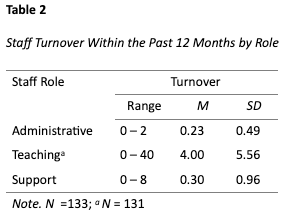
Explore how employer-provided benefits impact staff turnover in center-based child care settings, and why supporting early educators matters for retention.
By Robyn Kelton, MA and Irina Tenis, PhD June 12, 2025
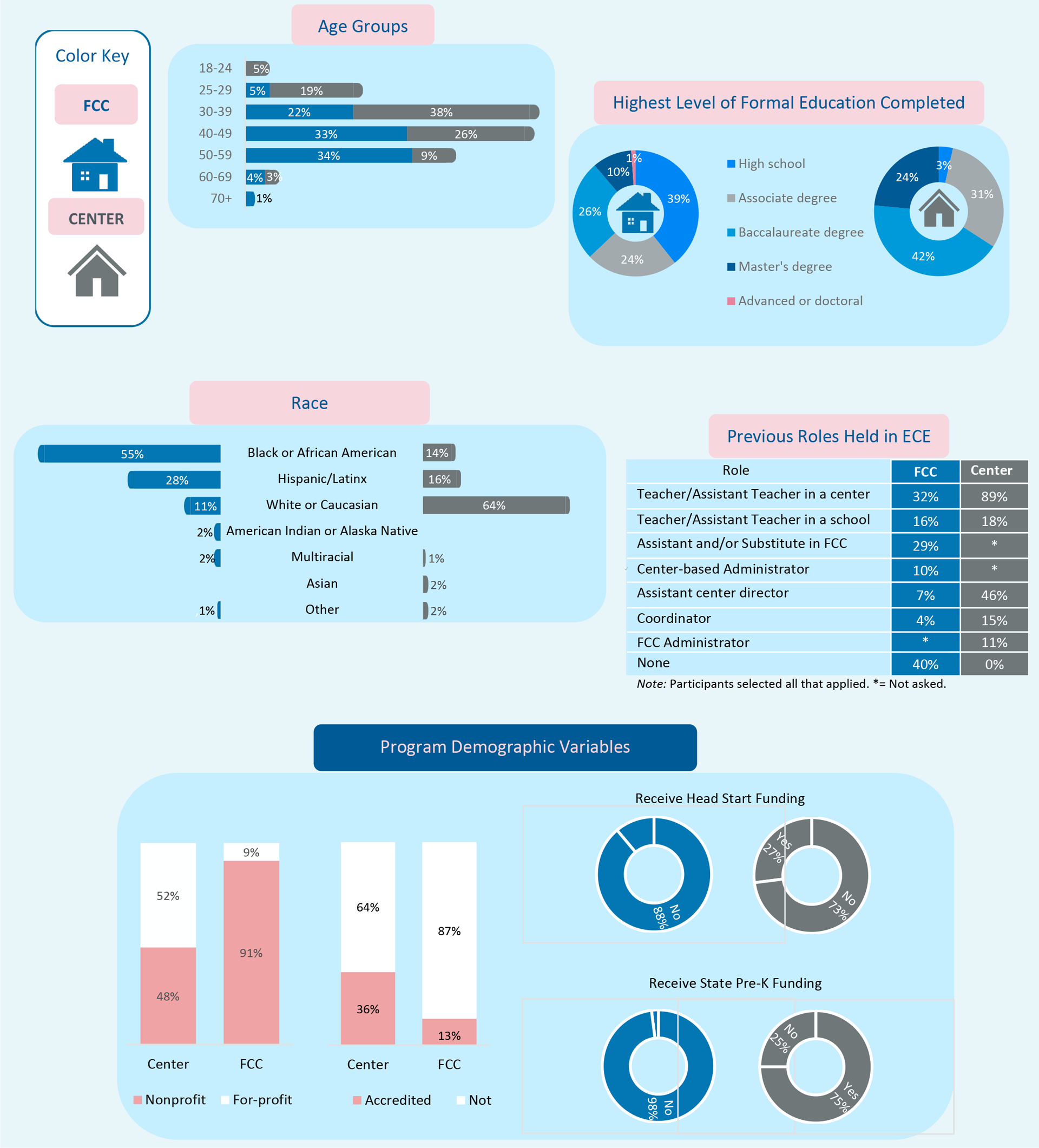
Explore the similarities and differences between center-based and family child care leaders, united by a shared mission.
Woman with glasses smiling, in a navy blazer, in front of a blue curtain with a US flag.
By Robyn Kelton, MA, and Irina Tenis, PhD April 3, 2025
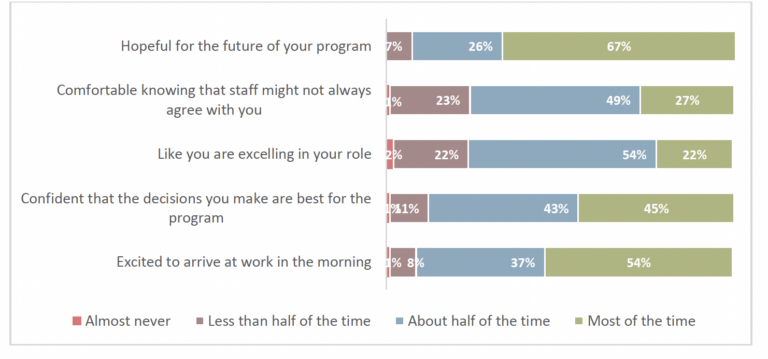
Learn about stress, burnout, and resilience among novice early childhood administrators—stress is common, but hope and professional supports can sustain them.
By Robyn Kelton, MA, and Irina Tenis, PhD June 4, 2024
Discover the vital role of family child care professionals, their challenges, and contributions as a critical workforce in early childhood education.
By Marie L. Masterson and Teri N. Talan May 9, 2024
Discover the vision and impact of the Whole Leadership Framework, guiding early childhood leaders in driving change and strengthening programs.
By Robyn Kelton and Irina Tenis January 31, 2024
Family child care programs struggle amid declining numbers—this article reveals how improving business and professional practices can help sustain vital ECEC services.