McCormick Institute for Early Childhood

BY | February 9, 2021

At the McCormick Center, we are big on change. Very big. We have an entire leadership academy dedicated to embracing change and taking charge of it. At times, embracing change is easier said than done, especially when faced with unexpected challenges. The pandemic has put us all to the test, and our team managed change with fortitude and grace. Despite the chaos of the past year, we have had many significant achievements, including:

  • Pivoting our in-person offerings and services to be fully virtual, including our leadership academies, program evaluation, technical assistance, quality assessment, and our national conference, Leadership Connections™;
  • Assisting with the development and piloting of new Illinois ExceleRate Quality Rating and Improvement System standards and supports as a key partner in the state of Illinois’ Preschool Development Grant Birth to Five—ExceleRate Pilot;
  • Developing consensus recommendations for a unified professional framework for program leaders; and
  • Launching Aim4Excellence™2.0 , the online national director credential for early childhood administrators with new content and a completely redesigned format.
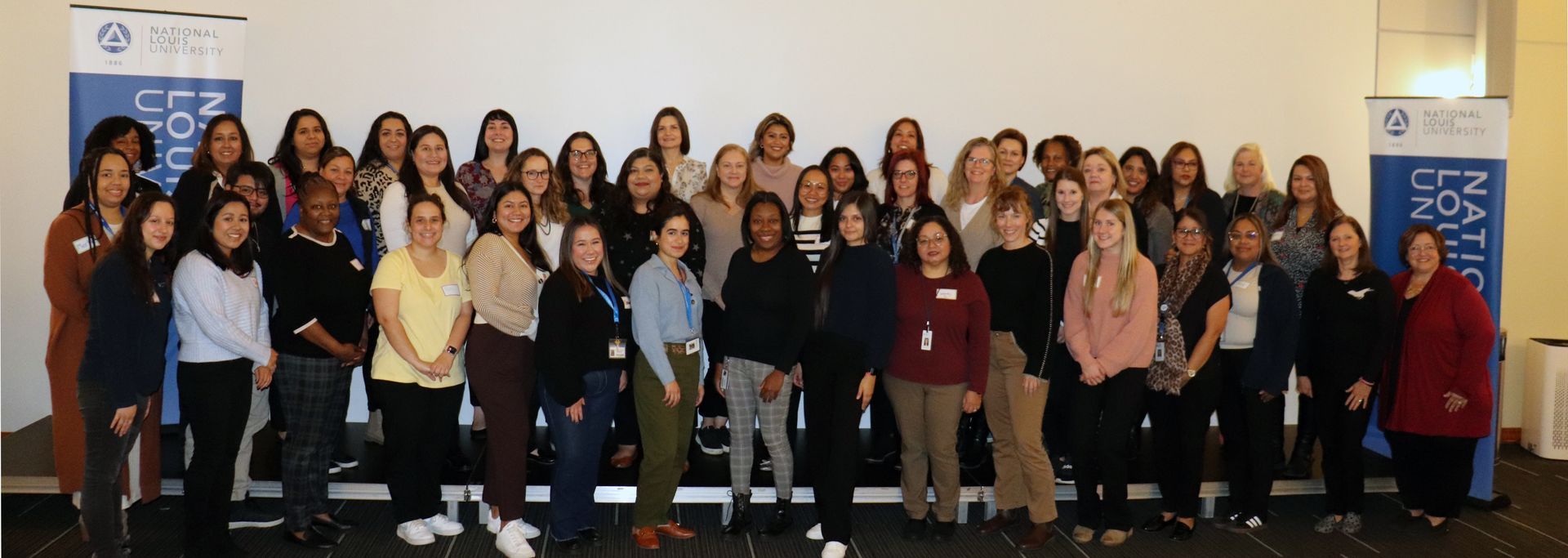
As we move into 2021, there is a sense of change in the air. One of the changes taking place at the McCormick Center is that we are on the move—figuratively and literally! This month, we are closing our training center in Wheeling and the McCormick Center will be expanding to three National Louis University campuses, including:

Chicago Campus (The Gage Building)
18 S. Michigan Avenue, Eighth Floor
Chicago, IL 60603

Lisle Campus
850 Warrenville Road
Lisle, IL 60532

Wheeling Campus
1000 Capitol Drive
Wheeling, IL 60090

Phone : 1-833-LEAD-ECE

Mailing Address:
McCormick Center
c/o National Louis University
122 S. Michigan Avenue
Chicago, IL 60603

Our main office will be the Chicago Campus location. Please visit our Team page to learn more about the new locations of our team members.

We will always remember our 10 years at 6200 Capitol Drive fondly, yet we are excited about the new opportunities ahead. Our various locations provide us with new spaces and resources to continue and expand the work we do. When the time is right, we look forward to seeing you at one of our new locations!

By Cara Murdoch and Sherry Rocha December 12, 2025
By Cara Murdoch and Sherry Rocha Community collaborations can strengthen your early childhood program, expand services for families, and increase your visibility and credibility as a trusted resource in the community. But effective partnerships don’t begin with a phone call—they start with a plan. Start with internal planning Before reaching out to community members or organizations, gather insights from your internal team. Hold a brief planning meeting to discuss goals, identify needs, and build a shared vision for collaboration. Consider including: Members of your board of directors or advisory board Program staff members Interested family members and parents of enrolled children. REVISIT your mission and goals A clear, shared understanding of your program’s purpose will guide effective partnerships. Before reaching out to community members or organizations, gather insights from your internal team. Hold a brief planning meeting to discuss goals, identify needs, and build a shared vision for collaboration. Consider including: What is your mission? What strengths and expertise do we bring to the community? What challenges do our enrolled families face? What support or resources would be most helpful? What can we offer potential partners in return? Clarity about these questions will ensure that your outreach to community members and organizations is focused and meaningful. Learn about local resources Begin exploring the services and organizations that exist in your community. These may become valuable referral partners or direct collaborators. Examples include: Early intervention services Family support agencies Mental health providers Multilingual tax-preparation volunteers Knowing these resources helps you connect families with the help they need. share your space and services Your early childhood center may be a valuable asset for other groups. Consider offering your space to other programs or groups to strengthen your role as a community hub. Possibilities include: Scouting America or Girl Scout meetings Parenting workshops or support groups Health screenings or nutrition programs Community committee meetings participate in community events Raising visibility in your community opens doors to partnership. Become involved in: Neighborhood clean-up days Local fairs or festivals Library literacy events Cultural celebrations School district events These types of interactions naturally build trust and relationships. build and expand your network Partnerships often begin with small conversations or shared goals. Stay curious and connected—the more people you meet, the more opportunities arise. Potential collaborators include: Museums Public libraries Human services departments Colleges and universities Local schools Cooperative Extension services Hospitals and clinics Banks and financial advisors Mental health agencies Early intervention programs Remember: partnerships are mutually beneficial Successful collaborations are built on: Clear communication Shared goals Appreciation for each other’s strengths A commitment to supporting families and the community Whether the support you receive is financial, advisory, or educational, strong partnerships help everyone thrive. A final thought Community partnerships don’t happen overnight. With the proper planning, your early childhood program can become a powerful and connected resource in your neighborhood. Start small, stay open to ideas, and let relationships grow.
Show More