McCormick Institute for Early Childhood

BY McCormick Center Staff | February 14, 2023

The  Paula Jorde Bloom Scholarship , first awarded in 2019, is intended to support emerging and aspiring early childhood leaders dedicated to providing the highest quality care and education for children and families. The scholarship, established by Paula’s family after she passed in 2018, highlights  her legendary devotion to improving early childhood professional standards. This year’s awards, valued at $500 each, fund the winners’ registrations for Leadership Connections. We extend congratulations to the following leaders:

A woman with long black hair is smiling for the camera.

Mona Webber

Mona Webber is a Director at the Goddard School, located in Darien, IL. She has been working in the field of Early Childhood Education for over 20 years, where she has been a toddler teacher, program director, and assistant director. She was a 2021-2022 Teach Plus Illinois Early Childhood Policy Fellow.

“Leadership Connections provides a unique opportunity to collaborate and network with Early Childhood specialists and leaders. While I have been in my current position for only one year, I have been inspired by our team members and recognize how important it is to provide opportunities to support and motivate them so they can be the best at what they do. It is my ongoing commitment to further enhance my leadership skills not only within our program but also within the field in providing equitable opportunities for children and families to have quality educational programs.” – Mona Webber
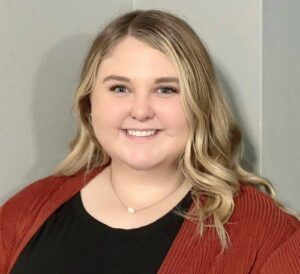
 

A woman wearing a red cardigan and a black shirt is smiling for the camera.

Kayli Bontrager

Kayli Bontrager (she/her) is the Family & Community Engagement Specialist for Birth to Five Illinois: Region 11. Kayli is personally and professionally passionate about families, specifically diverse family structures like blended, step, foster, multi-generational, and single-parent, and increasing awareness of their unique needs and challenges. Kayli obtained a bachelor’s degree in Human Development and Family Studies from Indiana State University and a master’s degree in Human Services from Eastern Illinois University, where she concentrated on family programming. In her current role, Kayli works to engage families and community members in Birth to Five Illinois’s work across Region 11, which covers Coles, Cumberland, Edgar, Shelby, Douglas, Moultrie, and Clark counties in Illinois. Birth to Five Illinois’s mission is to create a state-wide regional infrastructure that will amplify the input from communities in developing policies and funding priorities. Whether attending Story Hour at local libraries, participating in youth events like Trunk or Treats, or handing out flyers to community businesses, Kayli is out in the communities making sure families have the opportunity to share their voice on Early Childhood Education & Care.

“I’m so excited to attend Leadership Connections! The conference is a fantastic opportunity to speak with others in our field and learn from their successes and trials. I’m most excited about having the designated space to discuss the field of Early Childhood Education & Care with other professionals – specifically on the subject of family engagement!” – Kayli Bontrager

 

Learn more and register today to obtain or lowest rate for “The Time is Now: Leadership & Advocacy” National Virtual Conference.

By Cara Murdoch and Sherry Rocha December 12, 2025
By Cara Murdoch and Sherry Rocha Community collaborations can strengthen your early childhood program, expand services for families, and increase your visibility and credibility as a trusted resource in the community. But effective partnerships don’t begin with a phone call—they start with a plan. Start with internal planning Before reaching out to community members or organizations, gather insights from your internal team. Hold a brief planning meeting to discuss goals, identify needs, and build a shared vision for collaboration. Consider including: Members of your board of directors or advisory board Program staff members Interested family members and parents of enrolled children. REVISIT your mission and goals A clear, shared understanding of your program’s purpose will guide effective partnerships. Before reaching out to community members or organizations, gather insights from your internal team. Hold a brief planning meeting to discuss goals, identify needs, and build a shared vision for collaboration. Consider including: What is your mission? What strengths and expertise do we bring to the community? What challenges do our enrolled families face? What support or resources would be most helpful? What can we offer potential partners in return? Clarity about these questions will ensure that your outreach to community members and organizations is focused and meaningful. Learn about local resources Begin exploring the services and organizations that exist in your community. These may become valuable referral partners or direct collaborators. Examples include: Early intervention services Family support agencies Mental health providers Multilingual tax-preparation volunteers Knowing these resources helps you connect families with the help they need. share your space and services Your early childhood center may be a valuable asset for other groups. Consider offering your space to other programs or groups to strengthen your role as a community hub. Possibilities include: Scouting America or Girl Scout meetings Parenting workshops or support groups Health screenings or nutrition programs Community committee meetings participate in community events Raising visibility in your community opens doors to partnership. Become involved in: Neighborhood clean-up days Local fairs or festivals Library literacy events Cultural celebrations School district events These types of interactions naturally build trust and relationships. build and expand your network Partnerships often begin with small conversations or shared goals. Stay curious and connected—the more people you meet, the more opportunities arise. Potential collaborators include: Museums Public libraries Human services departments Colleges and universities Local schools Cooperative Extension services Hospitals and clinics Banks and financial advisors Mental health agencies Early intervention programs Remember: partnerships are mutually beneficial Successful collaborations are built on: Clear communication Shared goals Appreciation for each other’s strengths A commitment to supporting families and the community Whether the support you receive is financial, advisory, or educational, strong partnerships help everyone thrive. A final thought Community partnerships don’t happen overnight. With the proper planning, your early childhood program can become a powerful and connected resource in your neighborhood. Start small, stay open to ideas, and let relationships grow.
Show More