McCormick Institute for Early Childhood

BY Pamela Costakis, M.S.Ed. | October 25, 2022

A woman wearing glasses and a suit is smiling in front of a flag.

Sim Loh is a family partnership coordinator at Children’s Village, a nationally-accredited Keystone 4 STARS early learning and school-age enrichment program in Philadelphia, Pennsylvania, serving about 350 children. She supports children and families, including non-English speaking families of immigrant status, by ensuring equitable access to education, health, employment, and legal information and resources on a day-to-day basis. She is a member of the Children First Racial Equity Early Childhood Education Provider Council, a community member representative of Philadelphia School District Multilingual Advisory Council, and a board member of Historic Philadelphia.


Sim explains, “I ensure families know their rights and educate them on ways to speak up for themselves and request for interpretation/translation services. I share families’ stories and experiences with legislators and decision-makers so that their needs are understood. Attending Leadership Connections will help me strengthen and grow my skills in all domains by interacting with and hearing from experienced leaders in different positions. With newly acquired skills, I seek to learn about the systems level while paying close attention to the accessibility and barriers of different systems and resources and their impacts on young children and their families.”

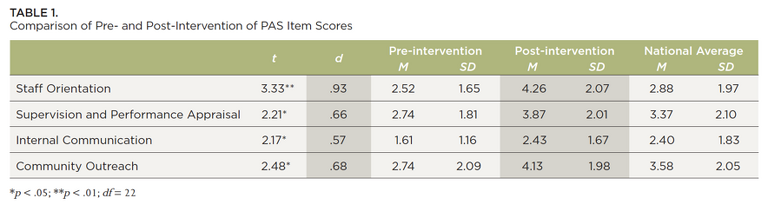
A table showing the comparison of pre and post intervention of fas scores

This document may be printed, photocopied, and disseminated freely with attribution. All content is the property of the McCormick Institute for Early Childhood.

Does it really matter? Why should I want to be self-aware anyway?


Self-awareness is a fairly new buzzword. I hadn’t thought much about this topic until this past summer when I attended a family birthday party. My brother and sister-in-law, who is a marriage and family therapist, were in town from California. She was talking with two of my cousins whom she had only met a few times, many years ago. On the ride home that night, she shared that they both were very good listeners, very authentic, and really tuned in to what she was saying. She then said, “They are very self-aware.” Here it was, something I wanted to claim for myself! Am I self-aware? I knew I had to learn more about this.


As I began to research self-awareness, I learned that one study estimates that only 10-15% of people are truly self-aware; however, it is a trait that can be cultivated, so the rest of us, in the 85-90% majority, have hope.


One article noted that self-awareness is positively correlated with higher overall happiness. It also is related to higher levels of job satisfaction, improved relationships with colleagues, and is helpful in managing emotions.


How many times have I wished I could keep my emotions in check? How many times have my emotions interfered with making decisions? Would I be a better leader if I was more self-aware? How would that impact my team and my leadership?


A DEFINITION OF SELF-AWARENESS


Self-awareness is the ability to focus on yourself and how your actions, thoughts, or emotions do or don’t align with your internal standards. If you’re highly self-aware, you can objectively evaluate yourself, manage your emotions, align your behavior with your values, and understand correctly how others perceive you. Self-awareness is a fundamental tool for self-control.


CATEGORIES OF SELF-AWARENESS: INTERNAL AND EXTERNAL


Internal self-awareness is understanding how well your standards match your environment. Am I in the best workplace for me? Does it match my values and passions?


External self-awareness is the ability to see how other people see you. As a leader, you must recognize how others view you and understand how you make others feel.


Psychologists Shelly Duval and Robert Wicklund noted, “When we focus our attention on ourselves, we evaluate and compare our current behavior to our internal standards and values. We become self-conscious as objective evaluators of ourselves.” In other words, when you focus on yourself rather than your environment, you compare yourself with your standards of correctness. These standards of correctness specify how you ought to think, feel, and behave. They are, essentially, your values and beliefs, also known as your ideals.


You may feel pride or dissatisfaction depending on how well your behavior matches your standards of correctness. If you are dissatisfied, you might change your behavior to better align with your standards. For instance, you might note feelings of discontent in your current role and recognize that you value creativity but don’t have the opportunity to exercise that passion. That dissatisfaction could lead you to pursue other creative outlets, changing your behavior to fit your standards.


TAKE A SELF-AWARENESS QUIZ


This self-awareness quiz will help you evaluate your hidden opportunities for growth and success in your work. In addition, the information provided by Mike Bundrant, the co-founder at the iNLP Center, will give you tips for self-reflection.


SELF-AWARENESS AND THE ROLE OF PROGRAM LEADERS


Are you in the 10-15% of people who are already highly self-aware, or are you, like me, part of the majority who need to think and do something to improve your self-awareness? Even if you are in the 10-15%, you also can learn to be more self-aware.


I wish I had known more about self-awareness when I was a leader of an early childhood program. At that time, I did know that introspection was important for teachers. I remember having the zero-to-three teachers reflect on their own early childhood experiences and their impact. How were they raised? How were they disciplined? How do they view the nature of children? What is the role of a teacher of very young children? How do the answers to these questions impact their teaching decisions? I was asking them to reflect and, in a sense, become self-aware.


How can the same sort of exercise and introspection be helpful to program leaders? How should we reflect on our own view of leadership? How do those views influence the way we lead? How does a leader’s previous experience shape leadership decisions?


At the McCormick Center for Early Childhood Leadership, we have developed the Whole Leadership Framework in order to clarify the concept of early childhood leadership. One of the domains is leadership essentials which are foundational competencies and individual qualities necessary for leading people, that are expressed in personal leadership styles and dispositions. Included in this is the personal attribute of self-efficacy and the tool of awareness of self and others.


The Stanford University Business Advisory Council cited Showry and Manasa in identifying self-awareness as “the superior competency that leaders must develop.” Daniel Goleman’s 1995 book, Emotional Intelligence, declared that self-awareness is the keystone of emotional intelligence. Frank Richards noted that without self-awareness, leaders are unable to demonstrate empathy for others. Goleman notes that self-awareness requires “a deep understanding of one’s emotions, as well as one’s strengths and limitations and one’s values and motives.” Karl Albrecht found that the degree to which leaders are self-aware enables them to select the most effective response for working with others.


HOW DO I INCREASE MY SELF-AWARENESS?


The following strategies will help leaders use self-awareness in their daily interactions with others to strengthen program communication.


  • Reflect. Leaders can reflect in many ways. Journaling, meditation, or yoga can all be beneficial. Carve out solitude. Avoid digital distractions. Focus on the ways self-awareness can help you lead.
  • Become a good listener. Check your biases. Be open to others and what they are telling you.
  • Seek feedback. Ask for feedback from a trusted source. Talk to a variety of people to develop a comprehensive view of yourself. Ask what they see as your best qualities. How would they describe you to others?
  • Check on your values and standards. Does your workplace reflect your values? Do your standards align with those around you?
  • Continue learning about self-awareness. Read helpful self-awareness resources. For example, look for articles online that connect self-awareness and leadership.


As a leader, the work begins with you, but you can take your staff on the journey with you by incorporating the strategies above into your work together. What other strategies can you use to incorporate self-awareness in your leadership practices? How can you build this into your workplace culture? The change begins with you.


Pamela Costakis, M.S.Ed., is the Quality Assessment Manager for the McCormick Center for Early Childhood Leadership at National Louis University (NLU), where she manages the two state assessment teams that conduct classroom and program assessments throughout the state of Illinois. Pam holds a baccalaureate degree in psychology from Bradley University and a graduate degree in early childhood education from Northern Illinois University. She also has a certificate from Erikson Institute in Infant Specialist Studies. Prior to joining the McCormick Center, Pam was a nursery school teacher, an early childhood special education teacher, family childcare network coordinator, state pre-K director of a large child care center, center director of a therapeutic preschool, center director of a child care center for women in treatment, and a master teacher in a Head Start center. The majority of her work has been with underserved populations.

By Dr. Neal Green February 8, 2026
Tools: Gemini Gems, NotebookLM, Perplexity Spaces Overview The evidence is clear that early childhood professionals' most significant challenge is a lack of time. Artificial Intelligence (AI) tools, when used strategically, can give administrators some of the time they desperately need, allowing them to focus more on their staff and the children and families in their care. This approach aligns with the foundational goal of strengthening leadership effectiveness and program impact (Abel, Talan, & Masterson, 2023). When I scan the AI landscape of available products and platforms, it becomes overwhelming. There are so many options that it is impossible to keep up with every new development. Focusing on a limited number of AI tools backed by organizations with strong infrastructure and fiscal stability is a wise place to start your AI journey. McCormick Institute for Early Childhood’s (MIEC’s) upcoming professional development sessions will focus on three AI tools. These include Gemini Gems, NotebookLM, and Perplexity Spaces. Think of Gemini Gems as your customized AI assistant that you "train" to follow your rules and meet your goals. Gemini Gems are the right tool to tackle Internal Operations . NotebookLM is perfect for creating Family Support resources that stick. NotebookLM is a powerful AI tool that uses only the documents or other resources you add to generate specific, focused output. Perplexity Spaces is a fantastic choice to address Marketing demands. Like many AI tools, you can toggle back and forth between open web searches and focused documents that are specific to your work. Gemini Gems: The “Specialist Teammate” Gemini Gems allow you to create templates you can use repeatedly for agendas, HR policies, and more. If you have used AI in the past, you know that writing an effective prompt takes time, and they can easily get "lost" if you use AI often. Gems removes that challenge and lets you save your most effective prompts without having to rewrite them every time you use Gemini. It is up to you to decide if you want to create several smaller Gems to tackle common challenges you face or create larger Gems that encompass large swaths of your work. For our purposes, we will focus our Gem work on Internal Operations, addressing Program Administration Scale (PAS) Item 9: Internal Communications (Talan & Bloom, 2011). Imagine using a Gem to turn messy staff meeting notes into professional minutes with clear action plans in minutes or less! NotebookLM: The "Walled Garden" NotebookLM is an excellent tool for Family Support for your center, addressing PAS Item 17: Family Support and Involvement (Talan & Bloom, 2011). After uploading documents and resources, such as your parent handbook or community referral lists, to your Notebook, you can create several resources that parents/guardians of your center students will love. Just a few of the impressive features available with NotebookLM include audio (podcast) summaries, video summaries, and reporting functions with templates or the option to create your own report with metrics that matter most to you. Perplexity Spaces: The "Research Librarian" Perplexity Spaces is a perfect AI partner for Marketing your early childhood education (ECE) program, addressing PAS Item 18: External Communications (Talan & Bloom, 2011). You can build your own centralized repository, with control over branding to ensure consistency and present a professional, current image. Adding specific instructions to your space eliminates the need to format documents constantly and saves valuable time. The consistency that a Perplexity Space offers in this regard allows you to upload messages that are the "voice” of your brand. Your marketing efforts are not only more aesthetically pleasing but also enable you to track trends at similar centers in your area, helping you assess the competition. Strategies for Success: Audit your Internal Communications: Identify one repetitive task, such as creating staff meeting agendas (PAS Item 9), and automate it with a Gemini Gem. Curate your Family Resources: Gather three to five existing documents to "feed" a NotebookLM project for more responsive family support (PAS Item 17). Standardize your Brand: Use a Perplexity Space to ensure all public relations tools project a consistent, professional image (PAS Item 18). Reflection Questions: Which administrative task takes the most time away from your interactions with staff and families? How might centralizing marketing materials (branding) impact the professional image to prospective families? Table 1: AI Tools for ECE Professionals
Show More