Welcoming Gen Z: What is the Secret Sauce?
BY Steffenie Moran and Jane Humphries | June 21, 2026
This document may be printed, photocopied, and disseminated freely with attribution. All content is the property of the McCormick Institute for Early Childhood.
Generation Z—those born in the late 1990s and early 2000s—is the newest generation to enter the early childhood education workforce. Often referred to as Gen-Z, this generation has navigated the world shaped by unique experiences. Gen Z has emerged with both distinct strengths and unprecedented challenges. Their deep digital fluency and comfort with rapid change position them as innovative, resourceful, and socially conscious individuals. However, their upbringing in a highly virtual world—compounded by the isolation and disruption caused by the COVID-19 pandemic—has led to noticeable gaps in real-world interpersonal experience, emotional resilience, and professional readiness.
From our experiences, these emerging professionals bring notable strengths, including digital fluency, fresh perspectives and a strong desire for purpose, belonging, and meaningful impact. Early childhood leaders often report that many arrive confident and eager to contribute, others are still developing the preparedness, resilience, and professional expectations required in early childhood settings. Although these experiences are not universal, such challenges can influence how effectively Gen Z educators engage with young children and collaborate with their teaching teams—making it essential for leaders to understand and respond thoughtfully to this evolving workforce. This first begins by understanding the perspective of a Gen Z staff member.
Gen Z Perspectives: What You Need To Know
Due to limited real-world experience working with young children, many Gen Z struggle to read children’s cues, manage group dynamics, redirect behavior and confidently lead play. Additionally, and possibly attributed to social interactions primarily being digital, they may be challenged with communicating with families professionally and productively. While seasoned staff usually understand early childhood work is emotionally intense, Gen Z staff members may experience heightened emotional sensitivity, anxiety in chaotic classroom settings, and difficulty navigating professional relationships, especially with more experienced staff. Self-awareness, while valuable, must be paired with emotional regulation and coping strategies—tools that some are still building.
Since early childhood education may be the first professional role of Gen Z staff, challenges in navigating professionalism and workplace expectations are necessary steps in development. Many directors have reported recurring issues such as using personal phones during work hours, arriving late or frequently calling out, and struggling to receive constructive feedback as intended. It is important to realize that these behaviors are typically not rooted in laziness or lack of commitment but instead reflect unclear expectations or generational differences in workplace norms and communication styles. Many have reported they have been surprised by the demanding physical labor, emotional intensity, and structure required in group care environments. Without proper orientation and support, responsibilities such as cleaning, diapering, and maintaining consistent routines can come as a surprise and feel discouraging, often resulting in disengagement. Staff working with GenZ team members must be reminded to always assume positive intent.
One of the most significant challenges identified lies in the communication gap between generations, which can lead to misunderstandings. Gen Z places a high value on collaboration, continuous feedback, and a sense of psychological safety in the workplace. Meanwhile, experienced early childhood leaders—accustomed to top-down leadership styles—may misread these expectations as entitlement or resistance. At the same time, Gen Z staff might view traditional leadership approaches as inflexible or lacking support. These generational disconnects are often not rooted in a lack of skill or commitment, but rather in expectations that are unclear, unstated, or interpreted differently on both sides.
From our unique roles as cohort facilitators of the McCormick Institute for Early Childhood’s Aim4Excellence National Director Credential, we have interacted with groups of directors working to welcome and integrate Gen Z staff into their early childhood program settings. In our discussions with these early childhood leaders, we have learned these new staff members require more than just orientation—development points include intentional mentoring, clear communication, and support systems that have been created and utilized to acknowledge their strengths and growth areas. This has included helping Gen Z teachers translate the day-to-day realities of early childhood work by providing clear structure and meaningful support to thrive. It has been through hours of thoughtful discussions we have shared insights and lived experiences of our directors which has resulted in a “special sauce” of five ingredients that have emerged—proven successful approaches when supporting and retaining Gen Z staff members:
- Establishing Clear Expectations
- Supporting Professional Growth and Development
- Offering Flexible Work Options
- Creating Psychological Safety and a Sense of Belonging
- Providing Intentional Support to Thrive
So, what happens when these five ingredients come together? Something powerful. Like any good recipe, it’s not just about having the right components—it’s about how they are blended, layered, and intentionally prepared. When directors thoughtfully combine clear expectations, growth opportunities, flexibility, psychological safety, with intentional support, they create more than a workplace—they create connection. And connection is the binding agent that transforms a group of individuals into a cohesive, committed team. Let’s look together at how each ingredient contributes to the “special sauce” supporting Gen Z team members.
A Special Sauce: Creating Connections
Creating connections is not a passive outcome; it is the result of intentional, strategic leadership. While shared values and open dialogue lay the groundwork, connection is sustained through clear structures and consistent practices. Directors in the Aim4Excellence cohort discovered that when support is proactive rather than reactive, misunderstandings decrease and engagement increases. Connection deepens when staff know what is expected of them, how they can grow, and where they stand. Let’s hear how seasoned directors mastered the ingredients found in the “special sauce”:
Establishing Clear Expectations
It’s essential to set clear expectations—from dress codes and attendance to communication styles and daily responsibilities. Don’t assume these expectations are understood; be explicit and consistent, creating opportunities for modeling, practice, follow-up, and feedback. Consider how expectations are presented and reinforced and think creatively to ensure your Gen Z audience knows where to access information and how to take the next steps. One director shared how she put together short videos for viewing purposes. These videos showed how staff members are dressed each day, staff role-playing how to talk with each other, discussing issues with parents, and, most importantly, engaging with children. These short videos ranged from diapering to meal times, engaging children in the morning while transitioning, and calming a child down who had been injured on the playground. The possibilities are endless! It was as simple as capturing video on the director’s phone and editing them using tools within media player software. Once complete, the videos were uploaded to the training materials on the program’s secure drive space for viewing purposes. Interestingly, this created quite a “buzz” and opportunity for more veteran staff to view the videos together while having meaningful conversations about the day-to-day expectations when working with young children.
Talking points are another high impact, low effort resource to support clear expectations with Gen Z staff. The age-old response of “I don’t know” when a parent is inquiring about a child’s day or a particular happening is frustrating for parents and teachers alike. Typing up a few “scripted” alternatives to “I don’t know” can serve as a guide and starting point to enhance professional and productive communication. Examples include “I just got into the classroom at 4, but since then Ethan finished his snack and has been excited to play in the block center,” “Let me pull up the daily report so that we can look at his day together” or “Miss Jasmine left at 4, but I can put a message out to her in our app to check in and get back to you.” Including such talking points throughout your orientation and ongoing staff development can support Gen Z and seasoned staff alike extending opportunities into staff meetings to brainstorm and role-play some of the responses.
Supporting Professional Growth and Development
Creating space for professional growth is equally important by using effective coaching. This must be based on open, twoway communication, which takes time to nurture and build. Leaders need to offer meaningful development opportunities, encourage reflection, and help Gen Z staff envision a long-term future in the field. A strong culture of feedback is key to their development, and using coaching provides opportunities for learning. Trish Koester, Executive Director at the Goddard School of Leander, TX shared, “When discussing performance or professional growth, I approach feedback through empathy and collaboration rather than evaluation alone. I frame conversations around reflective questions such as: How do you feel in your role? How is the school supporting your needs as an employee? What additional support would help you reach your career goals? These conversations also include opportunities for continued education, such as scholarships supporting growth from a CDA through a bachelor’s degree in education. Teachers are encouraged to identify their own strengths and areas for growth, reinforcing trust, autonomy, and shared ownership of development.” By fostering a respectful and collaborative environment, program leaders are able to take the responsibility for helping to narrow the gap between expectation and reality.
Offering Flexible Work Options
Flexible work options are often seen as valued by the Gen Z workforce and staff members across the generations. Flexibility may include time to attend appointments during the week, a four day/ten-hour schedule, or work-sharing with another parttime staff member. Though these work options which may require some maneuvering and creative thinking from leadership, the return is finding and keeping qualified individuals. Arianna Lopez, Executive Director at The Goddard School of Skokie, IL, shared that coming out of the pandemic, many of the teachers were looking for more flexible work options—and by using some creative thinking, their school has been able to support faculty retention. Arianna says “Historically, work modalities have been limited in our field with staff needing to be on site for ratio purposes. However, we have seen the Gen Z workforce seek out companies that take actionable steps to show they are empathetic to their mental health and work-life balance needs. A way that we have tried to show this is by offering some work-from-home lesson prep or training hours. This is done by offering staff members a few hours in the morning or afternoon to complete their lesson planning or training hour requirements. Additionally, if a staff member is out of PTO and needs to take a sick or personal day, we offer them an opportunity to borrow PTO or make up some hours during the weekend by completing their lesson planning or training requirements. We feel this benefit is simple to manage and provides dividends on return when it comes to morale and overall employee satisfaction.”
Creating Psychological Safety and a Sense of Belonging
Gen Z places a high value on collaboration, a sense of belonging and a sense of psychological safety in the workplace. Trish Koester, Executive Director at The Goddard School in Leander, TX shares “To promote psychological safety, I consistently remind teachers that questions, concerns, and honest self-reflection are welcome and valued. We provide multiple avenues for teachers to share feedback in ways that feel comfortable to them, including a suggestion box, participation in our Teacher Advisory Board (which offers direct communication with the school’s franchisee owners) and informal conversations in my office. Maintaining an open-door policy reinforces that teachers can speak openly without fear of judgment or negative consequences.” In addition to this strategy, Trish went on to share how they have created a powerful community of early childhood educators. “Beyond daily practices, we cultivate belonging through opportunities that strengthen relationships and community, such as teacher “show and tell” moments, a voluntary book club, and frequent celebrations and “just because” gestures of appreciation. These efforts communicate that each teacher matters, their contributions are valued, and they are an essential part of our school community”.
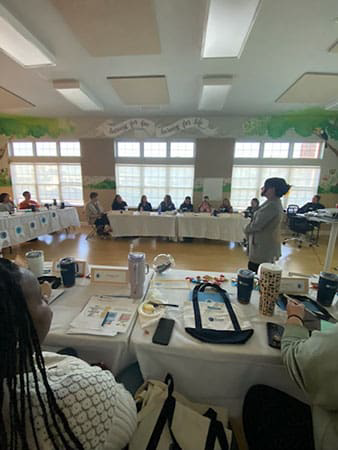
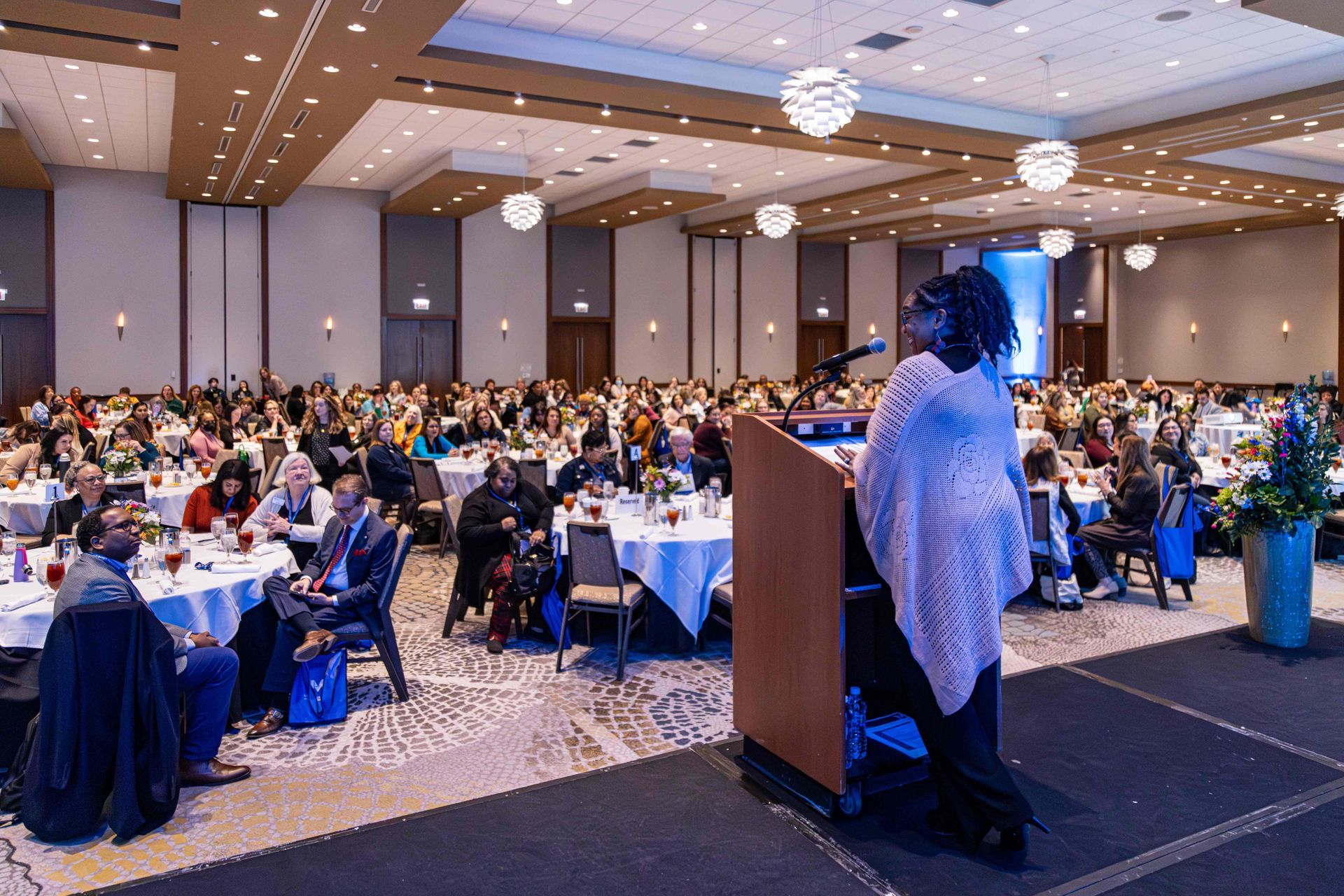
Arianna Lopez delivering PD for Goddard School directors in October 2025. [©Arianna Lopez]
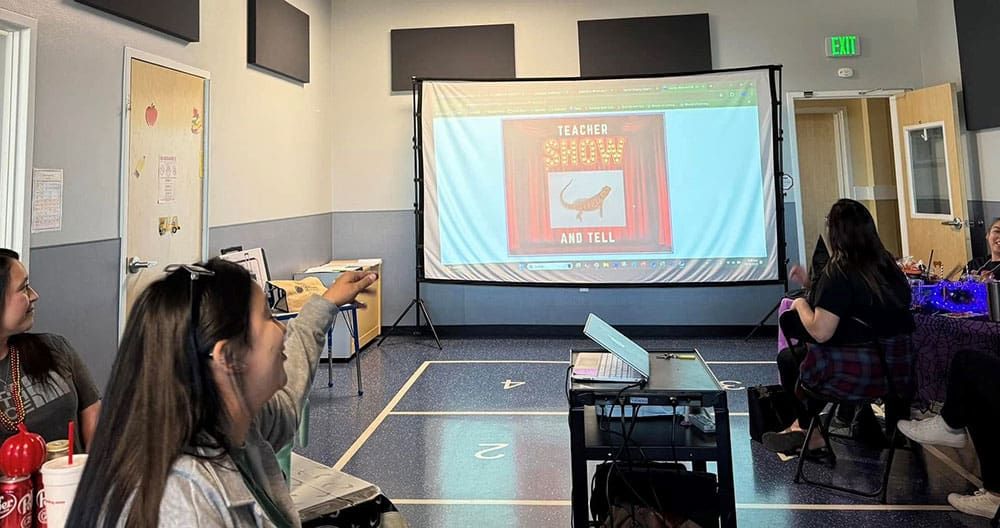
Teacher Show and Tell. [©Trish Koester]
Providing Intentional Support to Thrive
All program leaders should be reminded about the importance of empathy. Empathy is a key driver in improved communication and stronger relationships. Empathy and intentional support are necessary to create the sense of workplace belonging that the Gen Z workforce craves. Knowing what we do about Gen Z, consider how communication and support can be tailored intentionally. Trish Koester uses observation as an intentional strategy to create a sense of belonging. “Creating a sense of belonging is equally intentional. I focus on building connections and recognition across the team by highlighting classroom successes and innovative practices in our weekly internal memos. These acknowledgments celebrate both individual accomplishments and shared learning. For example, I recently recognized a preschool teacher whose students are now confidently writing their full names, as well as another teacher who created personalized name cards with photos to support student independence during transitions, an idea that sparked interest and collaboration among colleagues.”
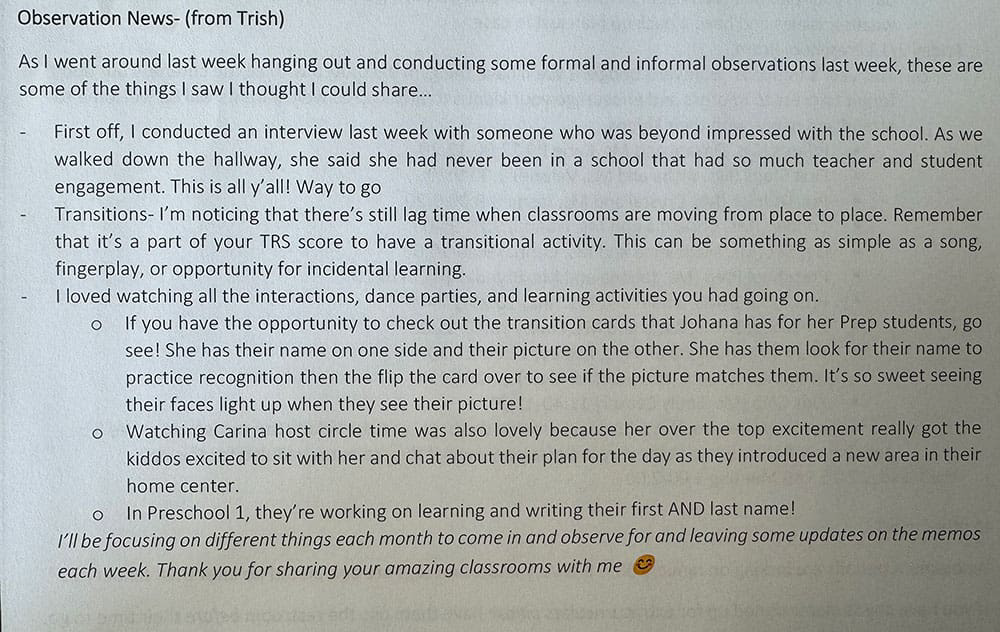
Trish’s observation notes. [©Trish Koester]
As early childhood leaders, we are not simply managing a new generation of educators—we are shaping the future of the field itself. Gen Z staff members arrive with fresh energy, deep purpose, and a desire to belong, but they also need guidance, structure, and support as they grow into the demands of this work. When directors intentionally blend clear expectations, professional development, flexibility, psychological safety, and thoughtful support, they do more than reduce turnover—they create environments where new teachers can truly thrive.
Ultimately, the “secret sauce” is not a single strategy, but the relationships built through them. Creating connection across generations strengthens teaching teams, nurtures resilience, and sustains the joy and meaning of early childhood education. By assuming positive intent, leading with empathy, and investing in our newest workforce members, we ensure that both educators and children experience the stability, belonging, and care that every high-quality program deserves.

Steffenie Moran, Manager-School Director Learning & Training at Goddard Systems, LLC, is an experienced early childhood educator with a demonstrated history of training and inspiring early childhood leaders. Steffenie is skilled in adult learning, live and virtual training, collaboration, social inclusion, customer service, and communication. She is a lifelong learner with a Bachelor’s degree focused in Human Services, Education, and Public Policy from the University of Delaware and graduate courses from Walden University. Steffenie is a recipient of the Aim4Excellence credential and has led many cohorts as a facilitator.

Jane Humphries, Ed.D., serves as the Director of Aim4Excellence at the McCormick Institute for Early Childhood at National Louis University. She has served as a director of an early childhood program, researcher, author, higher education faculty, and program leader for state programs serving children and families in Oklahoma. Providing oversight of the Aim4Excellence National Director Credential has allowed her to support growing early childhood leaders by facilitating multiple cohorts and working with multiple state professional development and quality rating and improvement systems.
© 2026 Dimensions Educational Research Foundation. All rights reserved. Exchange Press is an initiative of Dimensions Foundation, a 501(c)3 nonprofit organization.
Reflection question: The authors describe a “special sauce”—five ingredients that offer a successful approach to welcoming and retaining Gen Z. How do you include these ingredients in your work?
Read the full article and start your Exchange community membership today using code MCCORMICK50 to save 50%.