Ready to Present? Tips for Creating a Standout Conference Proposal
BY Lailah Malone | October 12, 2026
This document may be printed, photocopied, and disseminated freely with attribution. All content is the property of the McCormick Institute for Early Childhood.
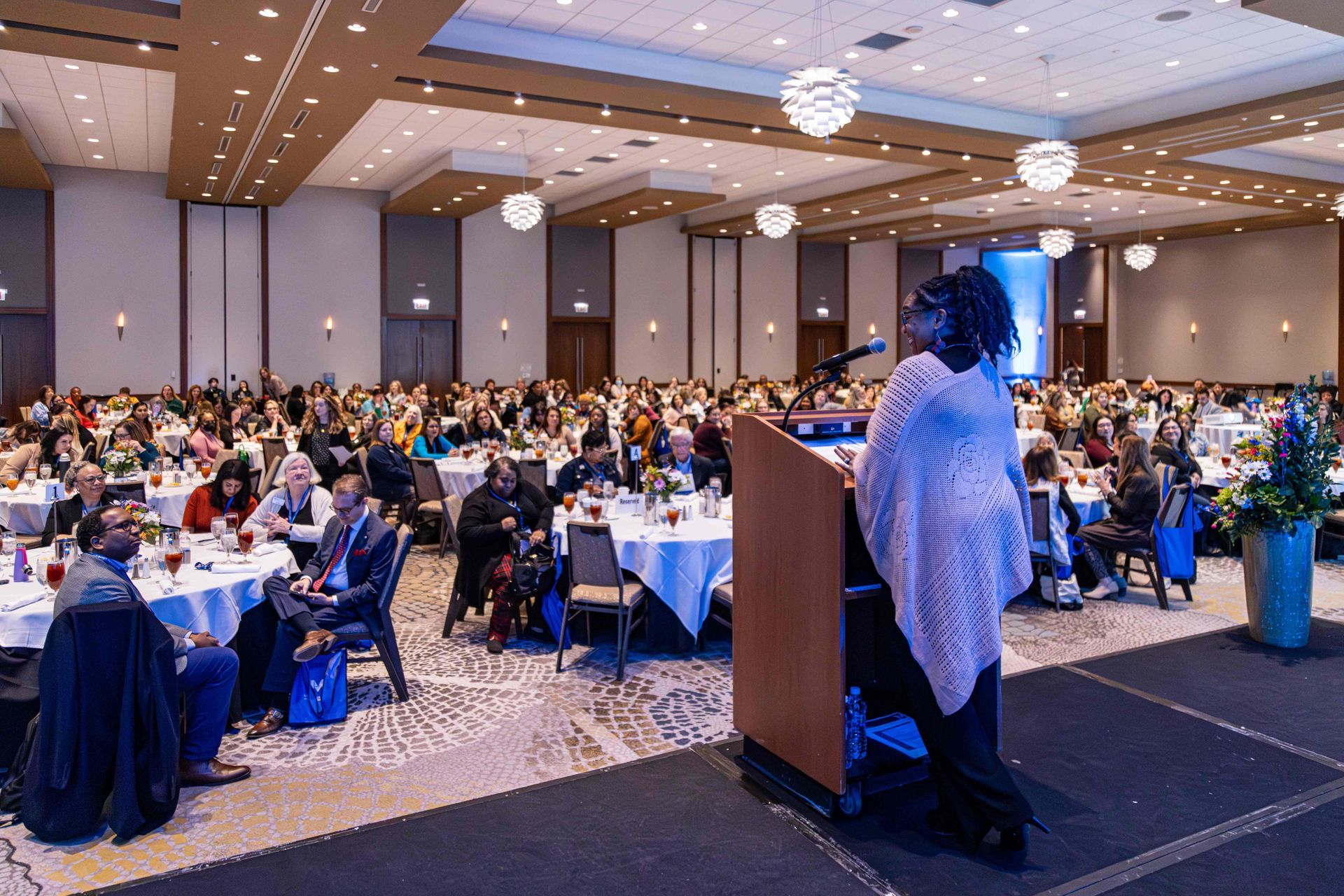
Early childhood program administrators and providers are talented and knowledgeable professionals who generally benefit from opportunities to share their knowledge. Submitting a proposal to present at an industry conference is a great opportunity to showcase your program’s successes, share innovative practices with peers, and help advance the early childhood field.
Presenting can also strengthen your professional network, elevate your organization’s visibility and credibility, and provide valuable leadership development experience for you and your team. Most importantly, your unique insights and lessons learned may inspire other educators and leaders while highlighting the meaningful impact of your work on children, families, and communities.
For the next annual Leadership Connections Conference on May 19-21, 2027, we invite speakers to submit proposals for sessions relevant to leaders in the Early Childhood Education and Care (ECEC) profession.
We encourage anyone interested — even if you haven’t presented at a national conference before — to apply. For all participants, we encourage you to consider a few things.
Why do you want to present?
What are the learning outcomes of your presentation?
What do you want participants to know or be able to do after they attend your presentation?
While there are many important topics in ECEC, Leadership Connections is focused on presentations specific to research, best practices, and innovations in ECEC Leadership. Presentations that address topics specific to these areas of leadership are prioritized.
Additionally, your proposal should demonstrate inclusivity in both content and understanding, while also providing clear alignment with adult learning theory and accessibility for all participants.
Below are some tips and tricks to help you prepare your proposal:
BE BRIEF/BE CLEAR
- Clearly describe your presentation and detail how your session will benefit ECEC leaders. This will help the review committee consider your proposal.
- Before you submit, ask a trusted colleague or friend to review your proposal.
- Refine your proposal using your colleague’s or friend’s feedback to ensure clarity.
HAVE OUTCOMES READY
- Most conference proposals require that you have clearly defined outcomes. Learning outcomes are the things you want learners to achieve as a result of your presentation. Start with “Learners will…” and clearly state what the session attendees will learn or be able to do as a result of your presentation.
NARRATIVE WITH IMPACT: HIGHLIGHT THE BENEFITS.
- Be concise in your session proposal narrative while also highlighting the benefits that come with attending your session.
- Include important details in your narrative that demonstrate the intended impact on learners. This will help the proposal committee (and, eventually, conference attendees) understand what will be gained by attending your presentation.
USE BACKWARD DESIGN
This strategy supports the presenter in starting with the outcomes and working backward by incorporating activities and session materials.
- Identify desired results (these are your learning outcomes)
- Determine acceptable evidence (how will you know if attendees learn what you intend for them to learn)
- Plan learning activities (this is the how–how you will teach the content)
FINAL REVIEW
In this step, you will read and review your proposal for clarity, completeness, and accuracy. Again, we strongly suggest you share your proposal with a trusted colleague or friend. You are looking for their insight to ensure you are including everything and that your proposal is clear, cohesive, and aligned with the rubric.
Although some might feel overwhelmed by the rubric and RFP process; this is completely normal. Even simple ideas can take some time to develop into a presentation. That is why using a step-by-step plan like the one we’ve shared here is crucial to your planning.
A strong proposal doesn't require a perfect program or groundbreaking research. It simply requires a meaningful idea, thoughtful preparation, and a willingness to share your experiences with others. Your perspective matters, and the knowledge you've gained through your work could be exactly what another early childhood professional needs to hear. Good luck, and don't hesitate to put your ideas forward!
Learn more about the May 19-21, 2027, Leadership Connections national conference in Schaumburg, IL.