A Leadership Coaching Model for Impact: Building on Decades of Evidence and Experience at the McCormick Institute for Early Childhood
BY Natalia Ambrozek, Wendy Connell, Lisa Downey, Robyn Kelton, Leslie Layman, Erin Cetera | July 23, 2026
This document may be printed, photocopied, and disseminated freely with attribution. All content is the property of the McCormick Institute for Early Childhood.
Every day, early childhood leaders are asked to do more-support staff, strengthen family partnerships, navigate regulatory requirements, and ensure high-quality learning environments for children. Leadership coaching offers something many administrators rarely receive: dedicated time and support to reflect, problem-solve, and grow as a leader. Rather than adding another task to an already full plate, coaching helps leaders work more effectively, build confidence, and create lasting positive change in their programs.
If your first thought is, "I don't have time for coaching," you're not alone. Many early childhood administrators already juggle competing priorities and packed schedules. Yet the leaders who benefit most from coaching are often the ones who feel the busiest. Coaching is not about adding another responsibility; it's about gaining a trusted thought partner who can help you address challenges more efficiently, strengthen your leadership practices, and ultimately save time by helping you focus on what matters most.
Perhaps you're wondering whether you have enough time, whether coaching is worth the commitment, or whether it will address the challenges you're facing right now. These are understandable concerns. The goal of leadership coaching is not to add another obligation to your schedule, but to provide personalized support that helps you navigate challenges more effectively. Even small investments of time can lead to greater clarity, stronger decision-making, and increased confidence in your role.
Early childhood program leaders shape what occurs in classrooms by fostering organizational climates that enable educators to optimize learning opportunities for children, engage families and communities, and participate in continuous professional growth and instructional improvement (Douglas & Kirby, 2022; Fonsén & Vlasov, 2022; Kelton & Talan, 2023). Early Childhood Education and Care (ECEC) program administrators typically have formal education and training in early education and child development. However, they often lack preparation in program administration (Kelton & Talan, 2023; Kelton & Tenis, 2024; 2025; Talan et al., 2014). As a result, many struggle to navigate responsibilities in areas where they have little or no prior experience, particularly those related to human resources, coaching and supervision, data-informed decision-making, and strategic planning (Kelton & Hassan, 2026; Kelton & Talan, 2023; Kelton & Tenis, 2025).
Research demonstrates a clear link between early childhood leadership and classroom practice, team functioning, and staff support (Kelton & Talan, 2023). Effective leaders foster positive organizational climates, strengthen collaborative cultures, and provide instructional and relational supports that contribute to higher program quality and greater workforce stability (Bloom & Abel, 2015). Strong leadership is also associated with lower turnover rates and improved staff retention in ECEC settings (Heilala et al., 2024).
Failing to address the needs of program administrators undermines efforts to increase quality at the program and classroom level, as high-quality classroom practices cannot be sustained without high-quality practices at the administrative level.
There is strong evidence that supports coaching as an effective, job-embedded strategy for helping ECEC administrators develop as leaders (Kelton & Tenis, 2024; Schachner et al., 2024). The coaching model described in this paper helps leaders incorporate reflective practice, gain a deeper understanding of their own administrative practices, and adapt their leadership skills in real-life, real-time contexts. Research has shown that coaching at the administrator level results in increased distributed leadership among classroom teaching teams by cultivating more opportunities for collaborative inquiry, feedback, data-informed decision making, and practice-based learning within everyday contexts (Fonsén et al., 2023; Kelton & Hassan, 2026; Kirby et al., 2020). This, in turn, leads to higher job satisfaction and decreased turnover among teachers in the programs where leaders receive intentional coaching interventions (Douglass et al., 2022).
The McCormick Institute for Early Childhood (MIEC) has over 40 years of experience supporting ECEC administrators through extended leadership academies, quality assessment, quality-improvement coaching projects, and extensive research and evaluation work. The MIEC’s Leadership Coaching Model is a solid, data-informed, comprehensive model that supports administrators in their leadership development.
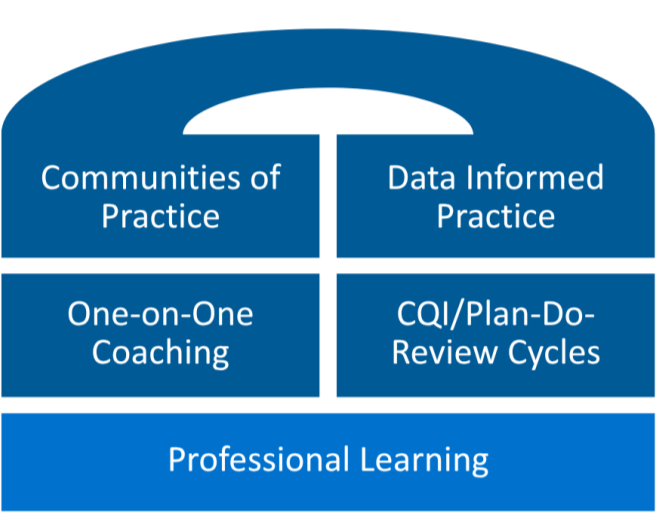
The MIEC Coaching Model utilizes the following elements:
1. One-on-One Coaching: Individualized coaching that addresses each leader’s professional needs while supporting growth in relevant areas of the Whole Leadership Framework (McCormick Institute for Early Childhood, 2026).
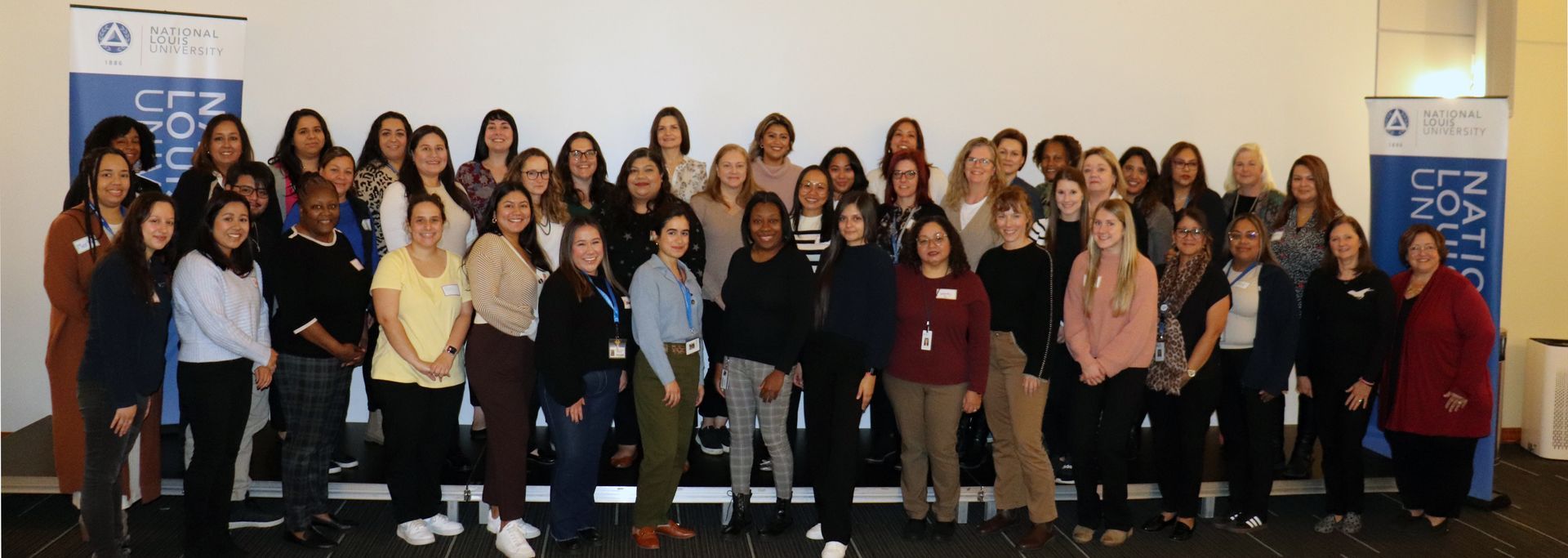
2. Communities of Practice (CoP): Intentionally designed opportunities for leaders to collaborate with peers in safe, respectful learning communities focused on shared successes and challenges.
3. Data‑Informed Decision Making: Data from formal assessments such as the Early Childhood Work Environment Survey (ECWES), Administrator Role Perception Survey (ARPS), and classroom Environment Rating Scale (ERS) observations serve as key inputs for setting goals using Leadership Development Plans.
4. Continuous Quality Improvement (CQI) and Plan–Do–Review Cycles: Plan-Do-Review Cycles serve as an overarching framework for identifying priorities, implementing improvement strategies, and examining results. This approach of Continuous Quality Improvement (CQI) applies systems thinking to continuous reflection and adjustment, enabling leaders to monitor progress, test changes, and sustain improvements over time.
Leadership Coaching Model
The following signature leadership academies and experiences that incorporate elements of the coaching model at MIEC demonstrate the positive impacts on ECEC program quality, staff retention, leader confidence, leader and staff credentialing, and college credit attainment:
- Taking Charge of Change (TCC), MIEC’s flagship leadership academy for ECEC administrators, has run for over 30 years. This academy combines professional development with
one-on-one coaching, Communities of Practice, and job-embedded
improvement projects
to strengthen ECEC administrators' knowledge and skills related to organizational change, systems thinking, and staff development.
- Key findings from over 500 participants across 20 years of TCC provide evidence of substantial increases in a leader’s ability to improve both the frequency and quality of staff orientations, performance appraisals, individualized professional development plans, as well as increased satisfaction related to supervision, staff development, internal communications, and family communications. TCC data demonstrate statistically significant increases in retention rates for staff and leaders, along with overall lower staff turnover rates (as compared to national averages).
- Leading for Impact Leadership Academy for ECEC administrators strengthens pedagogical leadership through sustained, relationship-centered learning—enabling administrators to empower teachers, improve instruction, and support high-quality experiences for children. Participants engage in
learning and coaching activities that require them to apply new strategies within their programs, such as conducting classroom observations, engaging in coaching and reflective supervision with teaching staff, and supporting staff in
Continuous Quality Improvement (CQI) efforts through teacher-led peer learning teams. Over time, participants develop leadership skills within an intentional, facilitated
Community of Practice (CoP)
where they can openly discuss leadership challenges, share strategies, and learn from one another’s experiences.
- The results of a formal evaluation from two completed cohorts of Leading for Impact suggest that the academy led to increased leadership capacity and professional growth for administrators, which was, in turn, mirrored in quality improvement at the program level (Kelton & Hassan, 2026). In fact, evaluation results demonstrated that there was a statistically significant increase in 29 of the 36 Whole Leadership Framework’s competency areas, specifically those related to distributed leadership, observing and providing teacher feedback, supporting teaching staff using child and classroom data to improve teaching and learning, and creating a strength-based team.
- In 2020, MIEC began work on a statewide pilot project funded by federal Preschool Development Grant Birth through Five (PDG B-5) funds, now referred to
as Smart Start Quality Support (SSQS). This project provides a Leadership Coach to center administrators. The Coach provides high quality leadership support to program administrators through monthly
individual coaching sessions, the development of
individualized leadership development plans using
formal and informal data, and a facilitated
Community of Practice for all participating administrators. Using Environmental Rating Scale (ERS) data, the Coach engages the ECEC leader in a process of
“PlanDo-Review,"
in which classroom staff work with administrators to strengthen teaching practice and classroom quality.
- Notable findings from our research on the SSQS project demonstrate significant increases in staff-reported program commitment, perceptions of professional growth, and their perceived levels of decision making. Also, a statistically significant number of participants reported expanding knowledge gained from ERS feedback to better inform improvement efforts across all classrooms and teaching staff. Nearly all programs saw increased distributed leadership via shared decision-making during Plan-Do-Review cycles. Further, SSQS boosted staff credentialing and college engagement, as well as administrator attainment of new Illinois Director Credentials and college coursework (Talan, et al., 2023). Further, leadership coaching combined with enhanced wages boosted staff credentialing.
Based on our over 40 years of experience in supporting ECEC leaders through professional development, coaching, quality assessment, and extensive research, we recommend the following actions for state professional development systems:
- Expand leadership coaching to include all program leaders and family child care professionals engaged in Quality Recognition/Rating Improvement Systems.
- Expand leadership coaching to include all leaders whose programs accept public child care funds.
- Consistently pair leadership coaching with teacher/classroom coaching to impact multiple levels of quality across programs.
Considerations for broader ECEC leadership development, through the MIEC coaching framework, at scale, include:
- Leadership coaching should include all three domains of the Whole Leadership Framework, focusing on an individualized approach to the development of competency across areas of administrative leadership, pedagogical leadership, and foundational leadership essentials (e.g., cultural competencies and communication skills).
- In an ideal system, leadership coaching is connected to self-paced, self-selected, asynchronous learning modules on high-need topics such as staff communication, team building, difficult conversations, staff recruitment and retention, and family engagement.
- Leadership coaching, regardless of funding source or system connectivity, is consistently built on data-informed practices using research-based tools such as the Administrator Role Perception Survey (ARPS), Early Childhood Work Environment Survey (ECWES), Program Administration Scale (PAS), Business Administration Scale for Family Child Care (BAS), and Environment Rating Scales (ERS).
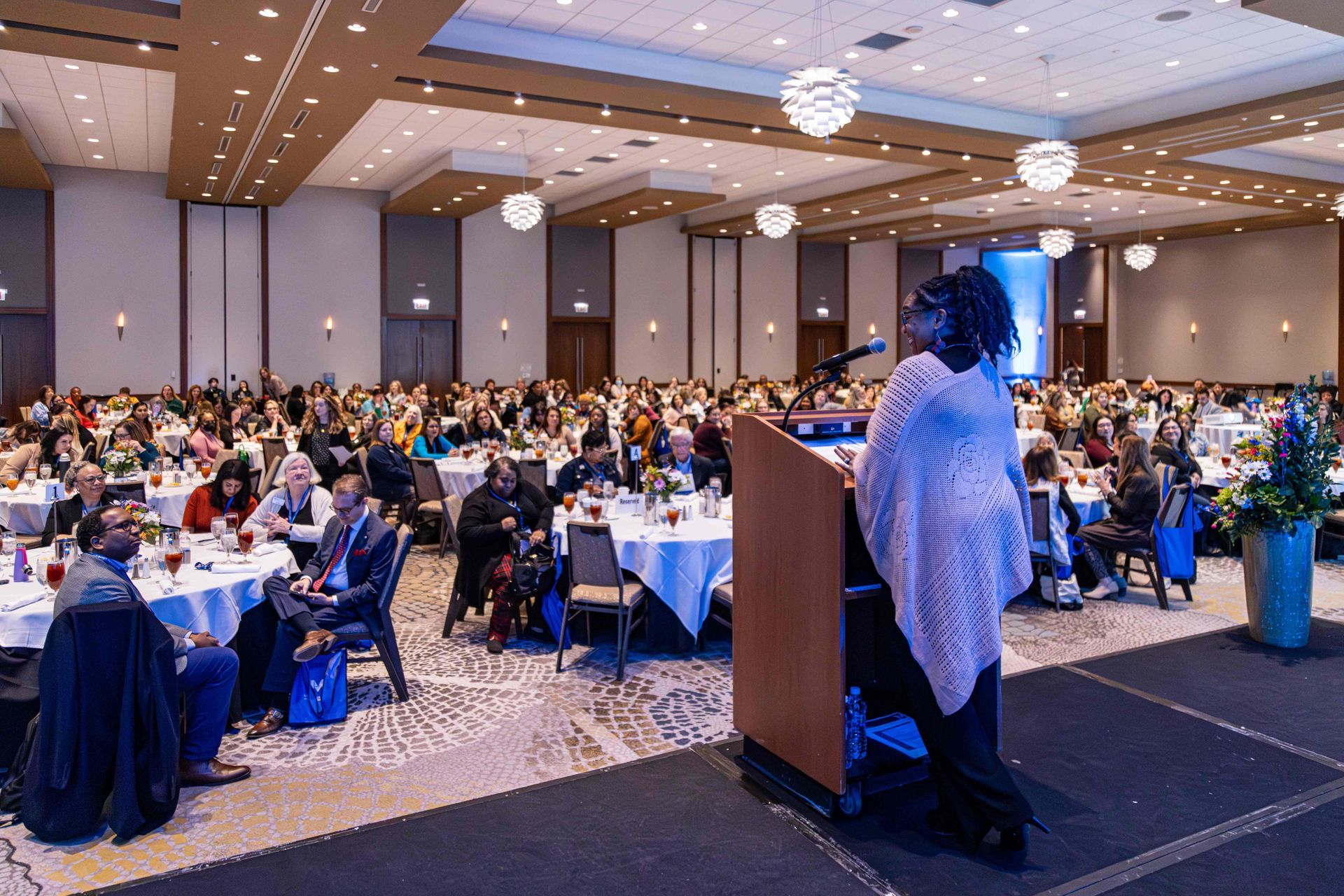
- Leadership Academies and professional learning cohort experiences consistently include facilitated Communities of Practice as a lever for increased engagement and greater impact.
- Pairing the coaching of leaders alongside teaching staff is a recommended strategy to increase global program quality.
The McCormick Institute for Early Childhood is committed to advancing efforts to strengthen and sustain a high-quality early childhood workforce across the U.S. Leadership coaching is an evidence-based practice that has demonstrated considerable impact on quality, workforce, and leader efficacy overall.
To learn more about our coaching and professional learning, please visit our website and contact us.
Works Cited
Bloom, P. J., & Abel, M. (2015). Expanding the Lens—Leadership as an Organizational Asset. YC: Young Children, 70, 10–17.
Douglass, A. & Kirby, G. (2022). Evaluating leadership development in early care and education. OPRE Brief #2022-141. Office of Planning, Research, and Evaluation, Administration for Children and Families, US. Department of Health and Human Services.
Fonsén, E., Szecsi, T., Kupila, P., Liinamaa, T., Halpern, C., & Repo, M. (2023). Teachers’ pedagogical leadership in early childhood education. Educational Research, 65(1), 1–23.
Heilala, C., Lundkvist, M., Santavirta, N., & Kalland, M. (2024). The impact of perceived leadership quality, moral stress, and participation on turnover intentions in early childhood education and care. Journal of Early Childhood Education Research, 13(3).
Kelton, R., & Hassan, R. (2026). From Acquired knowledge to leading change: Evaluating the impact of a pedagogical leadership academy for early childhood administrators. Research Notes. McCormick Institute for Early Childhood, National Louis University.
Kelton, R., & Talan, T. N. (2023). We can’t afford to lose leaders: Professional development to increase administrator retention during the first few years. Research Notes. McCormick Center for Early Childhood Leadership, National Louis University.
Kelton, R., & Tenis, I. (2024). Meeting the needs of the proficient early childhood administrator. Research Notes. McCormick Institute for Early Childhood Leadership, National Louis University.
Kelton, R., & Tenis, I. (2025). Leading Under Pressure: Stress, Burnout, and Commitment Among Novice ECEC Administrators. McCormick Institute for Early Childhood.
Kraft, M. A., Blazar, D., & Hogan, D. (2018). The effect of teacher coaching on instruction and achievement: A meta-analysis. Review of Educational Research, 88(4), 547–588.
McCormick Institute for Early Childhood. (2026). Whole Leadership Framework. National Louis University.
Schachner, A., Yun, C., Melnick, H., & Barajas, J. (2024). Coaching at scale: A strategy for strengthening the early learning workforce. Learning Policy Institute.
Talan, T., Connell, W., & Magid, M. (2023). What leaders do: Embed systems of continuous quality improvement. Research Notes. McCormick Center for Early Childhood, National Louis University.
Talan, T., Bloom, P. J., & Kelton, R. (2014). Building the Leadership Capacity of Early Childhood Directors: An Evaluation of a Leadership Development Model.
Early Childhood Research and Practice. 16 (1-2).
Natalia Ambrozek, B.S., is a Leadership Coach and Training Specialist at the McCormick Institute for Early Childhood at National Louis University. Natalia earned a bachelor’s degree in Early Childhood Education with a concentration in French at DePaul University and has since completed her ESL endorsement. She has served in the McCormick Institute as an Assessor and Quality Assessment Coordinator prior to her role as a Leadership Coach. Previously, Natalia taught for over 10 years in Head Start and Early Head Start classrooms in Chicago and has experience as an Assistant Director. Natalia is also part of the Illinois Southland chapter of NAEYC and an alumnus of the Maria Whelan Leadership Institute.
Wendy Connell, M.Ed., is the Manager of Early Childhood Leadership Coaching at the McCormick Institute for Early Childhood. Wendy has been with the organization since 2017, serving as the IDHS Report and Certification Specialist, then Leadership Coach for the Smart Start Quality Support program. She is also an adjunct professor in ECE at Waubonsee Community College. Throughout her career, Wendy has been a director of early childhood programs, an elementary school teacher, educator, volunteer coordinator, supervisor, and family child care provider.
Dr. Lisa Downey is the Executive Director of the McCormick Institute for Early Childhood at National Louis University (NLU), where she oversees all programming and operations. She leads a team of 75 staff dedicated to advancing the Early Childhood Education and Care (ECEC) profession through leadership, applied research, community and policy engagement, and innovative professional preparation. With over 35 years of experience in the field, Dr. Downey’s career includes roles as a toddler classroom teacher, child care center director, Child Care Resource and Referral (CCR&R) resource developer, training coordinator, and Director of Provider Services at Illinois Action for Children, where she managed CCR&R professional development for the Chicago area. She has been a faculty member at NLU for more than 15 years. Today, Dr. Downey focuses on addressing the complex challenges facing the ECEC workforce, creating scalable solutions that support the profession and ensure children, families, and communities thrive now and in the future.
Robyn Kelton, M.A., is the Director of Data and Evaluation for the McCormick Institute for Early Childhood at National Louis University (NLU). In this role, Robyn oversees the McCormick Institute’s research interests regarding evaluation and quality support tools, including Program Administration Scale (PAS) and Business Administration Scale for Family Child Care (BAS), the Early Childhood Work Environment Survey (ECWES), and the Administrator Role Perception Survey (ARPS). Robyn also oversees research related to the evaluation needs of the professional learning initiatives at the Institute as well as the relationship between evaluation tools and program quality, workforce retention, and leadership development. Other research interests include cognitive and developmental psychology, memory development, and learning. Robyn holds a Baccalaureate degree in psychology from the University of Kansas (KU) and a Masters of Arts degree in psychology with an advanced certificate of study in organizational psychology from NLU. Robyn is currently a doctoral candidate in the brain, behavior, and quantitative science Ph.D. psychology program at KU. Prior to joining the McCormick Institute in 2006, Robyn worked as lead teacher in a kindergarten classroom for an after-school program and lead teacher of a 4-5 year old classroom at a child care center.
Leslie Layman, M.S., is the Senior Director of Professional Learning and Innovation at the McCormick Institute for Early Childhood at National Louis University. In this role, she supports professional learning, including training, academies, coaching, and learning design. Prior to joining McCormick, Leslie was the Director of Early Childhood Education Strategic Initiatives at National Louis University, Director-Teaching and Learning Programs at Harry S. Truman College, and had many years of experience in early intervention, home visiting, and supporting children with developmental delays and their families. She holds Baccalaureate degrees in Psychology and Italian from University of Wisconsin, and a Master of Science in Child Development with a specialization in children with special needs from Erikson Institute.
Erin Cetera, M.S., serves as Senior Director of Quality Assessment at the McCormick Institute for Early Childhood at National Louis University (NLU), where she leads a team of nearly 40 professionals who conduct program assessments and deliver quality improvement training throughout Illinois. With more than four decades of experience in early childhood education, Erin has held a wide range of leadership and instructional roles, including preschool teacher, child care center administrator, college demonstration center director, and adjunct faculty member, teaching early childhood education courses for over 20 years. She joined NLU in 2018 as an Assessor and Training Specialist and has since advanced to her current leadership role. Today, Erin is dedicated to highlighting the steady improvements taking place in early childhood programs across Illinois. Guided by a deep commitment to young children, their families, and the professionals who support them, she champions efforts to create high-quality learning environments that foster positive outcomes for all. Let me know if you need anything else.